
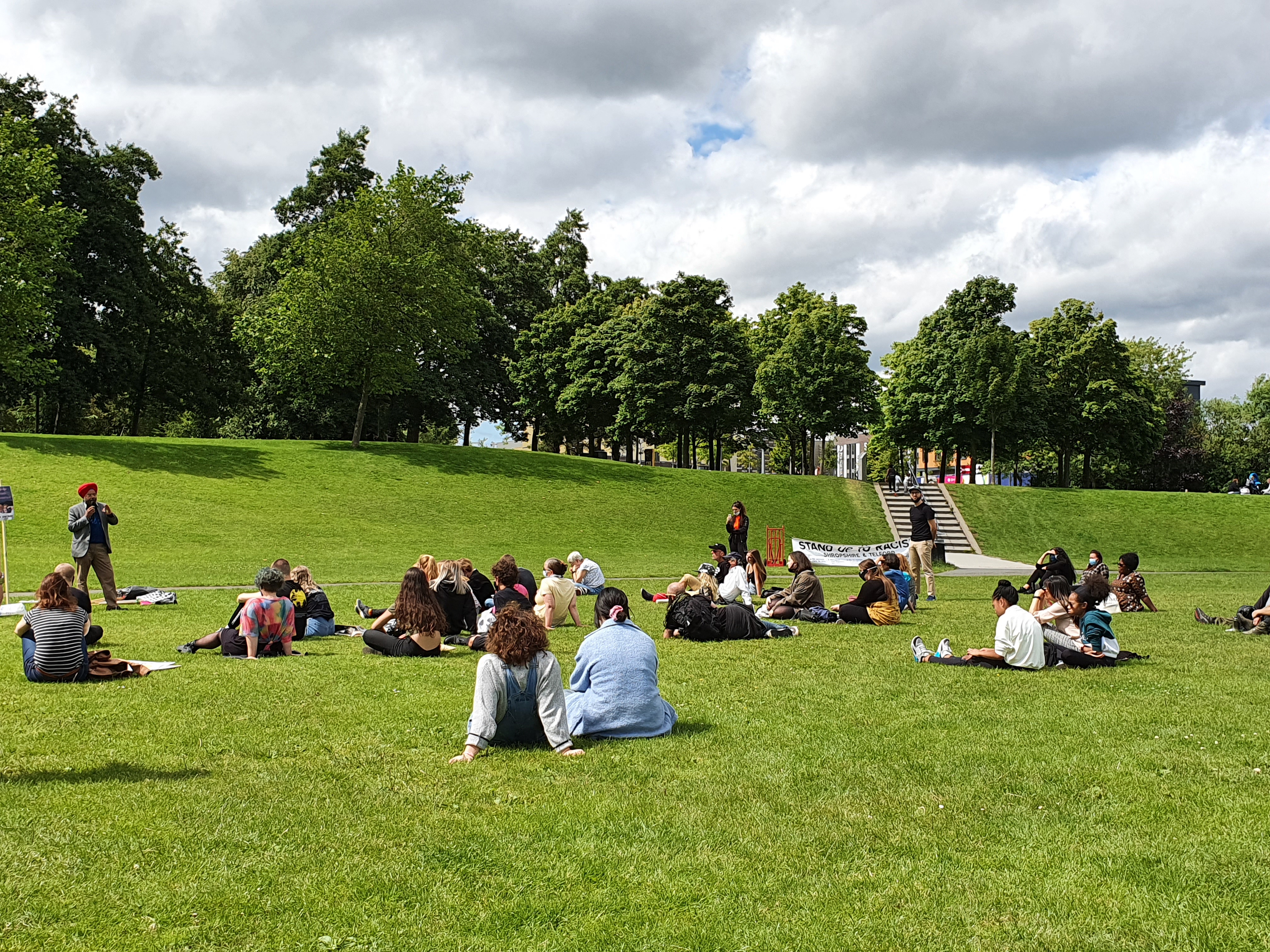
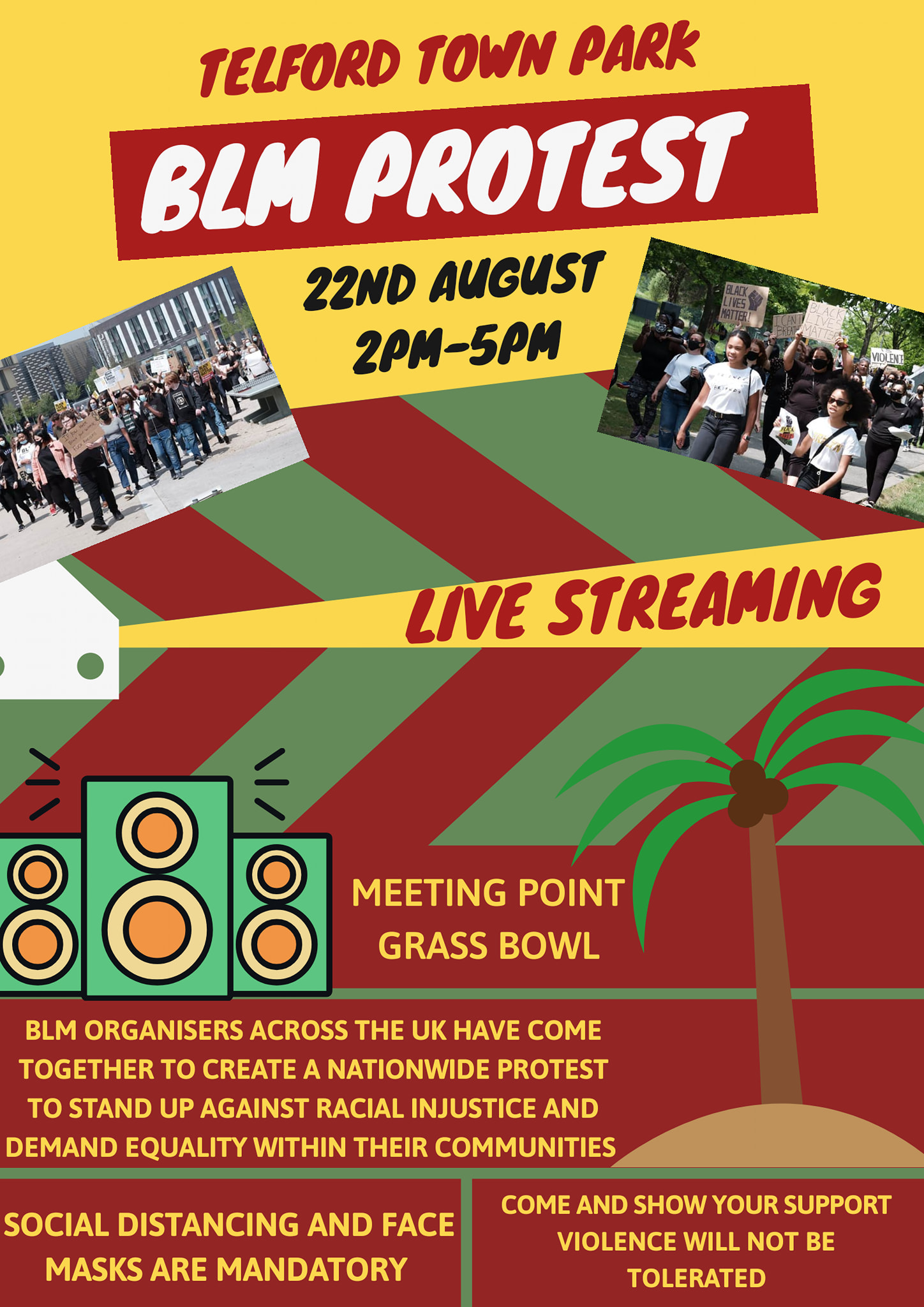
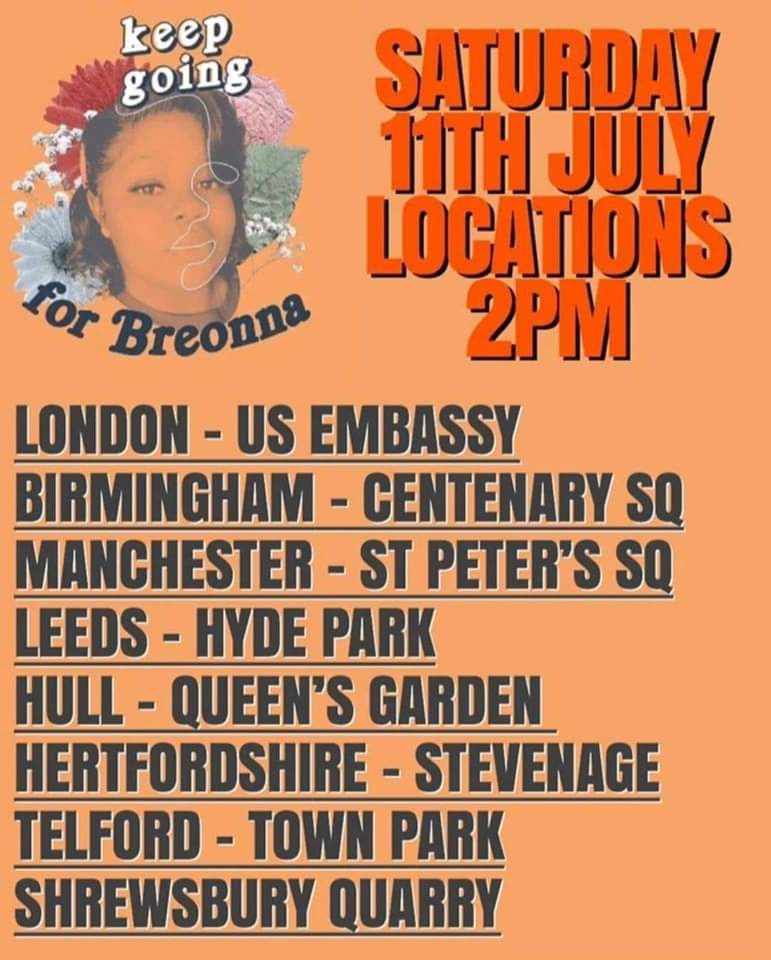
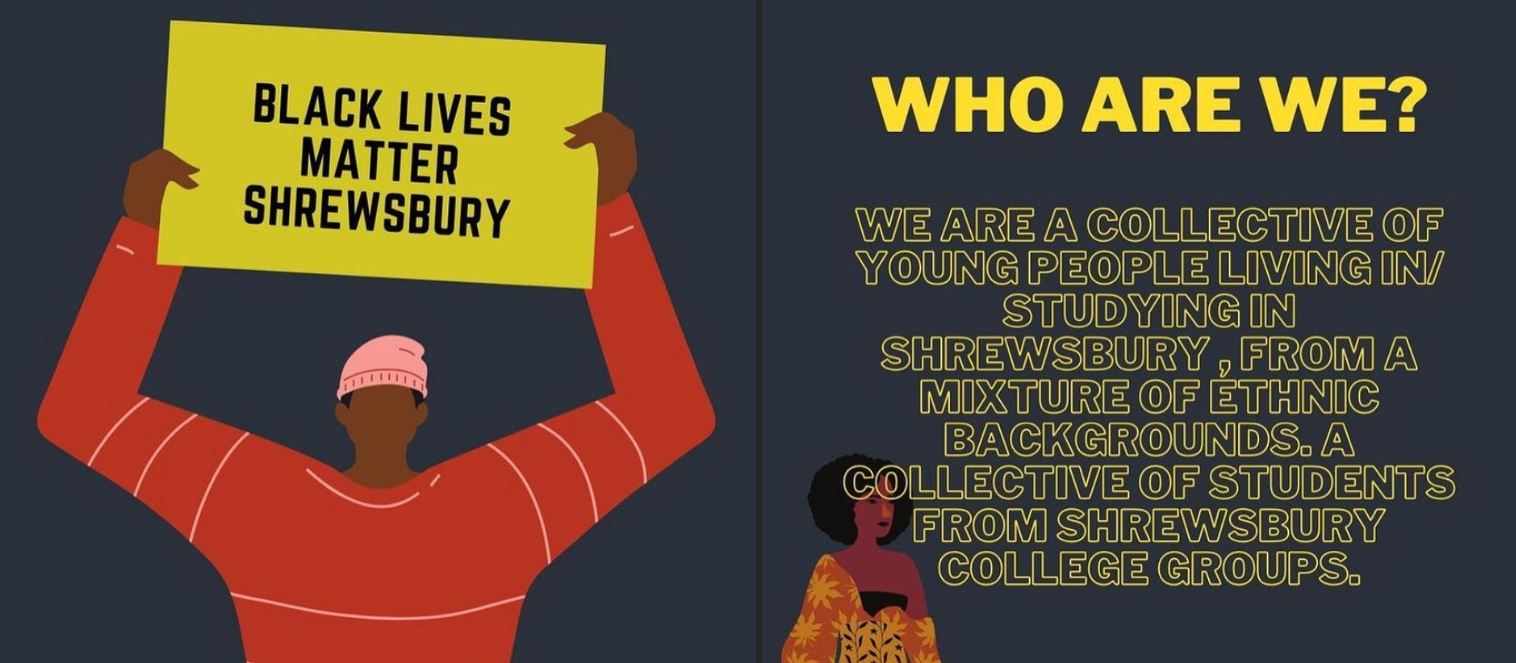
A big part of the SEMA story involves the spirit of activism and protest that emerged in our counties (Shropshire / Telford and Wrekin) after the judicial murders of Breonna Taylor (March 13, 2020) and George Floyd (May 25, 2020). Shortly after our opening conference, February 22-23, and the local demonstrations because of the murder of Breonna Taylor, March 13, the country went into Covid lockdown on March 23. The networks that mobilised for Breonna Taylor in March 2020 were activated again in May after the murder of George Floyd. SEMA helped young Black organisers in Shropshire / Telford and Wrekin to organise their rallies in solidarity with Black people worldover, under the slogan of Black Lives Matter and, here in our counties, totally independent and initiated by college students. Our own involvement led to Baylee-Rose Senior joining SEMA as a director, and further collaborations with the college student networks, including the Diverse Shelves Project aimed at diversifying college libraries locally.
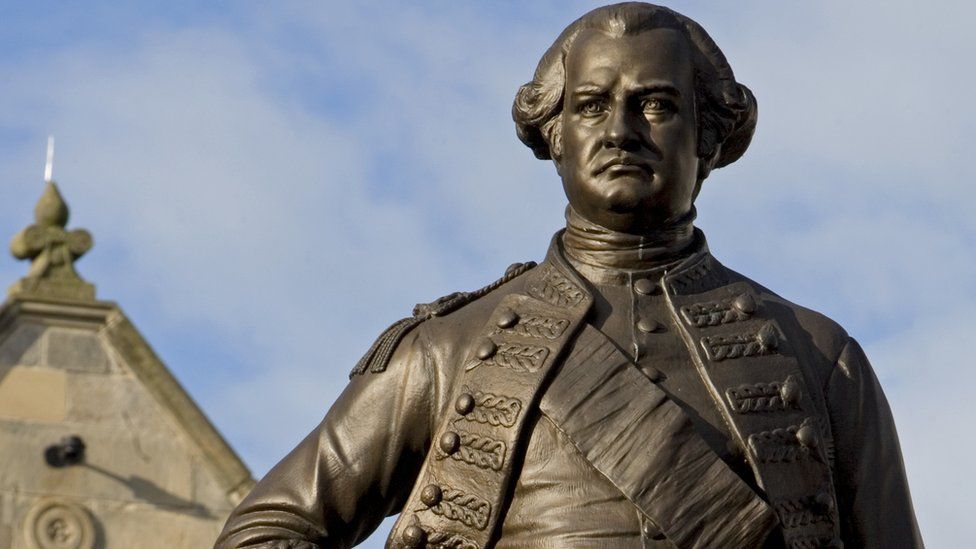
During those months much attention was turned to the statue of Robert Clive in the Shrewsbury Town Square. ‘Clive of India’ was the head of the East India Company, involved in the forceable deindustrialisation of Indian textiles for the industrialisation of British manufactures, namely textiles. While there were calls for the removal of the “unstable sociopath” (Dalrymple’s words) from the square, including two major petitions. There was enough momentum for a reluctant Shropshire Council to give us a hearing.
Our call, delivered by a coalition of organisations, gave the Council three options that it seemed to us they could take towards the controversy (they summarily chose Option 1). This was our statement:
[Start]
Due to the restriction of having only 550 words with which to address you, from 900: Please forgive us for getting right into a description of the legacy of Robert Clive that we share to you with heavy hearts for our forebears whose story this also is:
He made his fortune, along with other East India Company employees, from other people’s misery.
Edmund Burke […] outlining the case against Robert Clive and Lord Hasting in Parliament, said, “Cruelties unheard of and devastations almost without name, crimes which have their rise in the wicked dispositions of men in avarice, rapacity, pride, cruelty, malignity, haughtiness, insolence”. He then went on to describe in detail the violation of a poor Bengali woman who was unable to pay her tax; “They dragged her out, naked and exposed to the public view, and scourged before all the people…..they put the nipples of the woman into sharp edges of split bamboos and tore them from her body.”
[…] Durant in his book, “The Case for India” writes, “East India Company was utterly without scruple or principal, bribing, murdering, annexing and stealing—-tax defaulters were confined in cages and exposed to the burning sun—parents sold their children to meet the rising tax—-victims land being confiscated—–for the first time in Indian history the landless peasant were deprived of their traditional source of sustenance.”
[…]
Robert Clive committed suicide in 1774 and was buried quietly at night time in an unmarked grave. Dr Samuel Johnson, the famous man of English letters commented that “Clive had acquired his fortune by such crimes that his conscience impelled him to cut his own throat.”
The noted historian William Dalrymple has referred to Clive as an “unstable sociopath.”
There is extensive evidence of how Clive acquired his fortune and how he was ridiculed and lampooned in his own lifetime. His nickname in the popular press of the time was ‘Lord Vulture’. One commentator wrote that he was, “Utterly deaf to every sentiment of justice and humanity, and his greed knows no bounds.”
You will each recognise those words from the Open Letter written by Telford Councillor Kuldip Sahota. The entire content of that letter you each received is our shared sentiment on the human cost of Clive’s misdeeds. That letter received scant reply from Shropshire Councillors. The weight of it is our weight. It’s words are our words, us grandchildren of that legacy.
We are presenting you the question of: which path we will take going forward, you as Council and us as constituents? There seems to be three options, two of which are acceptable to us.
1. To keep the statue and status quo as is, unheeding to the ethnic minority coalition writing you now.
2. To replace the statue with Eglantyne Jebb, Agnes Hunt, or Wilfred Owen, figures we can all be proud of and enjoy.
3. To keep the statue but to attach to it an appropriate plaque detailing in brief how Clive’s fame and fortune arose.
Paths two and three are more than reasonable. We will enthusiastically support either one enjoined by programs for teaching the history of colonial/imperial legacy in Shropshire in consultation with us. Thank you for listening.
Shropshire Ethnic Minority Alliance (SEMA)
Shrewsbury BLM
Telford BLM
Shropshire/Telford-Wrekin BLM Auxiliary
Fairness, Equality Respect Shropshire (FRESh)
Rainbow Film Festival
[End]
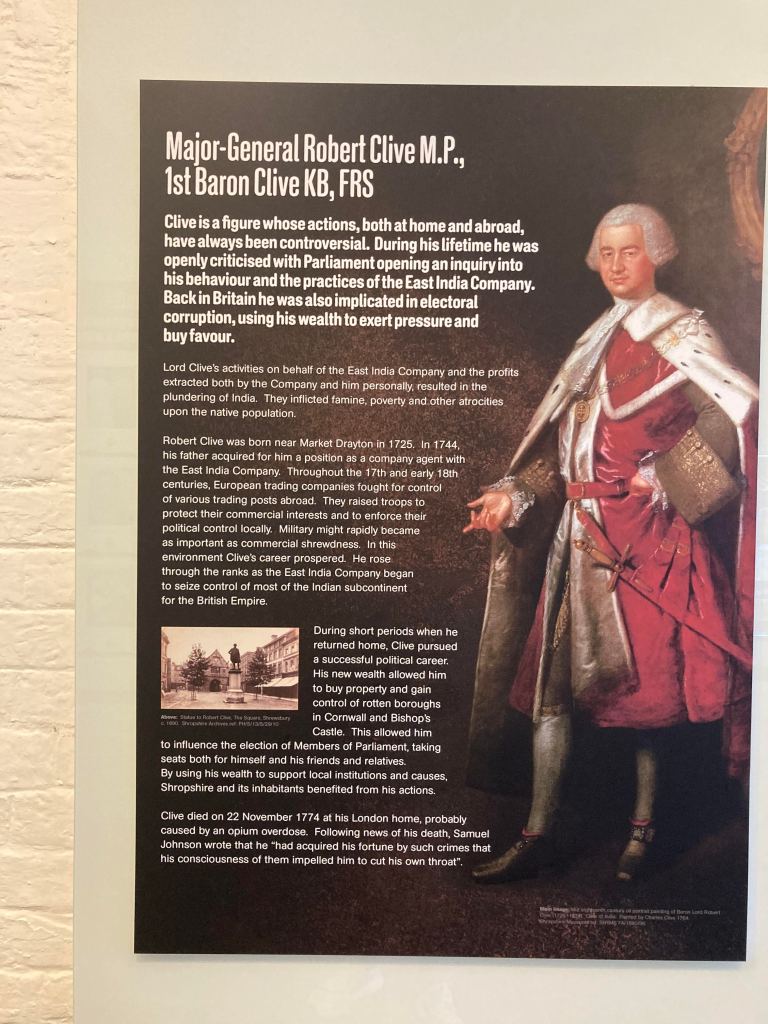
After some months, having from the start done everything to silence, prevaricate and ignore the problem of having a colonial warlord in the pride of place in the town square, Shropshire Council changed their Option 1 to Option 3 and drafted an interpretation panel to go next to the statue and another for the museum with the most minimalist description of Clive’s legacy of violence. We corrected that draft to a more honest biography of Robert Clive. It was a success for our organisation and our network.
Our advocacy work is not limited to issues of race, or to the effects of racism, but includes activity to build up our neighbourhoods for the good life of all folks. We have been engaged by Shrewsbury Council for their Cultural Strategy, Shrewsbury and Telford Hospital NHS Trust for help to reach under-heard communities, local families to advocate in disputes with schools, Shropshire Supports Refugees for delivery of workshops on trauma and conflict, West Mercia Police for community engagement, and much more.
Our team are comprised of active community members, folks who work for the betterment of their local communities, regardless of colour, and we are trained and equipped for many types of engagements to build up positive capacities in organisations and statutory bodies and effectively counter negative and discriminatory workplace cultures, advocate for those being bullied, and move towards conciliation based on justice and open communication. If you or your workplace need help with doing better in Equality, Diversity and Inclusion, reach out to Shropshire Equality Means Action (SEMA) to begin a conversation with us.
 Shropshire Equality Means Action